Latest Update: 09.05.2025
The James Webb Space Telescope (JWST) is operated by the Space Telescope Science Institute (STScI), in Baltimore, Maryland, on the Homewood Campus of Johns Hopkins University,
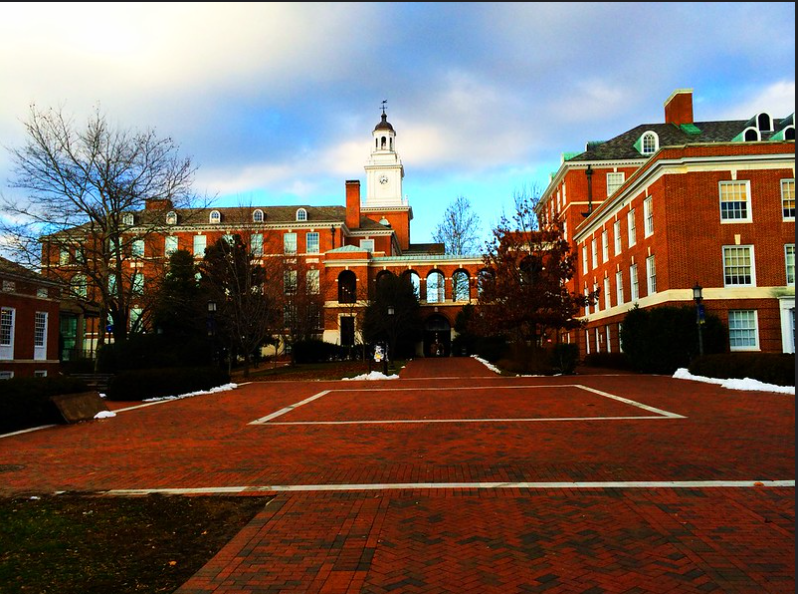
Image Url: https://www.flickr.com/photos/like_the_grand_canyon/11821895896
Dr. Jennifer Lotz is the director of the Space Telescope Science Institute (STScI). The Space Telescope Science Institute serves as the multi-mission operations center for NASA’s flagship astronomical observatories. Around 700 people work at this world-class astronomical research center. In addition to operating the James Webb Space Telescope, the Space Telescope Science Institute provides various other services, such as operating the Hubble Space Telescope.
The leadership team consists of 25 people. While they do not decide on your observation time, it is worthwhile to know who they are. At least two members are key figures for the James Webb Space Telescope and are cited in various articles.
Dr. Tom Brown
Head, James Webb Space Telescope Mission Office
Dr. Iain Neill Reid
Head of the science mission office at STScI
The James Web Space Telescope Flight Control Room
The Scpace Telescope Science Institute has create a YouTube Channel:
JWST YouTube Channel: https://www.youtube.com/jwstobserver
Introduction to the James Webb Space Telescope JWST Documentation
Allocation of Observation Time
“Roughly 10,000 hours of observing time (includes a buffer) is allotted to different groups for JWST’s first year of life. About 6,000 hours were given to the scientists who submitted proposals around the world, while nearly 4,000 hours were already set aside for scientists who helped design and build JWST and its instruments. The STScI also has about 460 hours of discretionary time which have been allotted for what is known as “Early Release Observations.” Data from these hours, scheduled to be done in the first five months of science, will become public immediately, so that anyone — even those who did not get time with the telescope — can analyze the observations and write their own studies.” Reference
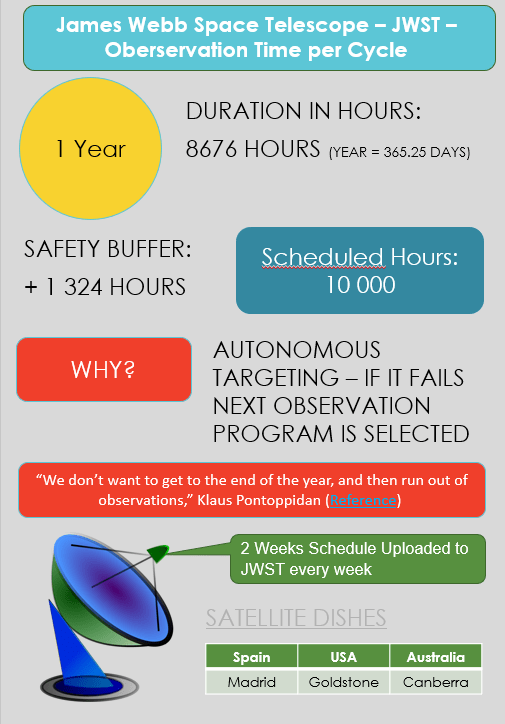
Why Is There a Buffer of Observation Time per Cycle?
The observatory will point at its target autonomously. If the execution of the commands fails, the next observation target will be selected. Therefore, as a fallback, more observation programs per cycle are selected than the actual total time available per cycle. The scheduling itself is done in two-week increments by the STScI. “We don’t want to get to the end of the year, and then run out of observations,” Pontoppidan says.” Reference
The James Webb Space Telescope obversation time is allocated through three disitinct type of programs.
- The Guaranteed Time Oberservation (GTO) program
- The General Observers (GO) program (66% of total)
- The Director Discretionary Early Release Science (DD-ERS) program
Guaranteed Time Observation Program – GTO
The GTO program provides guaranteed observing time. Scientists who developed hardware or software components, or who contributed technical and interdisciplinary expertise to the observatory, are rewarded through this program. For the next three cycles (years), 16% of the total observation time is reserved for this program. Reference.
List of Observations selected.
Even though astronomers cannot apply for this program, it is still a valuable source for seeing the outcomes of the observations. These scientists have developed the scientific instruments and are best positioned to demonstrate the quality and capabilities of these instruments.
Members of the Science Mission Office at STScI are responsible for the oversight of the JWST science program selection process. The members involved include Neill Reid (Associate Director for Science), Alessandra Aloisi (Head, Science Mission Office), Louis-Gregory Strolger, Amaya Moro-Martin, and Technical Manager Brett Blacker.
General Observer Program – GO
The GO program provides observation time to all astronomers. JWST is an “open skies” telescope, “which means anyone can submit a proposal to use it, and the data collected will be shared with the world as soon as possible so that everyone can analyze and learn from it.” Reference “Participation in this program is open to all categories of organizations, both domestic and foreign, including educational institutions, profit and nonprofit organizations, NASA Centers, and other Government agencies.” It represents the bulk of the observing time on the James Webb Space Telescope. Scientists need to apply for observing time through a yearly peer review process conducted by a Time Allocation Committee (TAC), which consists of about 200 members. A similar process was used for the Hubble Space Telescope in the past. The review uses a dual-anonymous peer review (DAPR) system, which hides the names of team members from expert reviewers and vice versa. The process involves more than a dozen anonymous panels.
The Director Discretionary Early Release Science (DD-ERS) program
“Scientists were invited to participate in the James Webb Space Telescope (JWST) Director’s Discretionary Early Release Science (DD ERS) program. A total of ~450 hours has been allocated to support 13 teams who will provide the community with early access to substantive, representative datasets to enable full scientific exploitation of JWST in Cycle 2 and beyond.”
Archive Reserach (AR) Program
Additonally existing data can be analysed through the Archival Research (AR) Program. Approval is part of the GO Program submission process.
How much data is collected?
5.42 Mbps (Megabits per second) or
458 gigabits per day.
Reference
Proposal submission process:
Documentation: https://jwst-docs.stsci.edu/
The total cost for one hour of observation time—already paid by NASA (90%), ESA, and CSA—is roughly $170,000 per hour. This figure does not include the effort of the scientists who requested the observation, nor the effort of the Time Allocation Committee in selecting proposals. These hourly costs are calculated based on 6,000 hours of yearly observation time allocated to the GO Program over a period of 10 years. The cost per hour will decrease if the observation time for the GO Program is increased each year, or if the James Webb Space Telescope is used for more than 10 years. For example, the Hubble Space Telescope is still operating after 32 years. Reference.
To make the most of this precious observation time, a stringent selection process was established, similar to that used for the Hubble Space Telescope.
The Time Allocation Committee has 200 members, including 52 from ESA member states. There are 18 panels, each consisting of about 10 people who review the proposals. The panels meet over a period of three weeks.
Yearly Cycle for Submission
Cycle 4: Submission October 16, 2024, by 8:00 pm US Eastern Daylight Time: 2,377 proposal with demand for observing time: 78,000 hours (~9:1 oversubscription rate) See.
Selected: 274
Success Ratio: 1 to 8.7
The Cycle 4 GO prime time is distributed as follows:
| Number | Program Type | Observation Time | Total Hours | Anticipated |
| 112 | Very Small | ≤ 20 hours | 1338 | 1950 |
| 86 | Small | > 20 and ≤ 50 hours | 3014 | 2900 |
| 35 | Medium | > 50 and ≤ 130 hours | 2654 | 2250 |
| 8 | Large | >130 hours | 1524 | 1400 |
Cycle 1: Submission 24th November 2020: 1173 proposals – 2,200 unique investigators from 41 countries, including 43 US states and territories, 19 ESA member states, and 4 Canadian provinces.
Selected: 266
Success Ratio: 1 to 4.4
112 Very Small programs (≤ 20 hours) for 1,338 hours
86 Small (> 20 and ≤ 50 hours) for 3,014 hours
35 Medium (> 50 and ≤ 130 hours) for 2,654 hours
Available time: 6000 hrs (250 days) versus 24 500 hrs of all proposals submitted.
The Cycle 1 GO prime time is distributed as follows:
- 52% to small programs (less than 25 hours)
- 32% to medium programs (25 to 75 hours)
- 16% to large programs (more than 75 hours)
ESA 33% proposals accepted, 30% of observation time
Blacker Friday (Name by Astronomer’s who applied for observation time): Brett Blacker from Space Telescope Science Institute will inform Astronomer’s if their proposal was accepted or rejected. Reference
Cycle 5:
Proposal Submission Start – August 1, 2025
Proposal Deadline – October 15, 2025
Blacker Friday – Mid March 2026
Reference
Proposal
Why is it so important for Astronomer’s to succeed with their proposals?
“As an observational astronomer, I kind of live or die by what telescope time I get,” Larissa Markwardt, a Ph.D. student in astronomy at the University of Michigan, (space.com)
The authors of the selected proposals will typically have one year of exclusive access to the new observations, after which the data will become publicly available for download by anyone from the online archive at STScI. However, not all scheduled observations use this exclusive access period. For example, around eight programs in the exoplanets and disks observation category will allow immediate public access. The archive is located here.
Science Instruments for Observation
4 Science instruments: MIRI, NIRCam, NIRSpec, and NIRISS are available.
MIRI – Mid-Infrared Instrument
NIRCam – first mirror alignment image
NIRSpec – Near Infrared Spectrograph
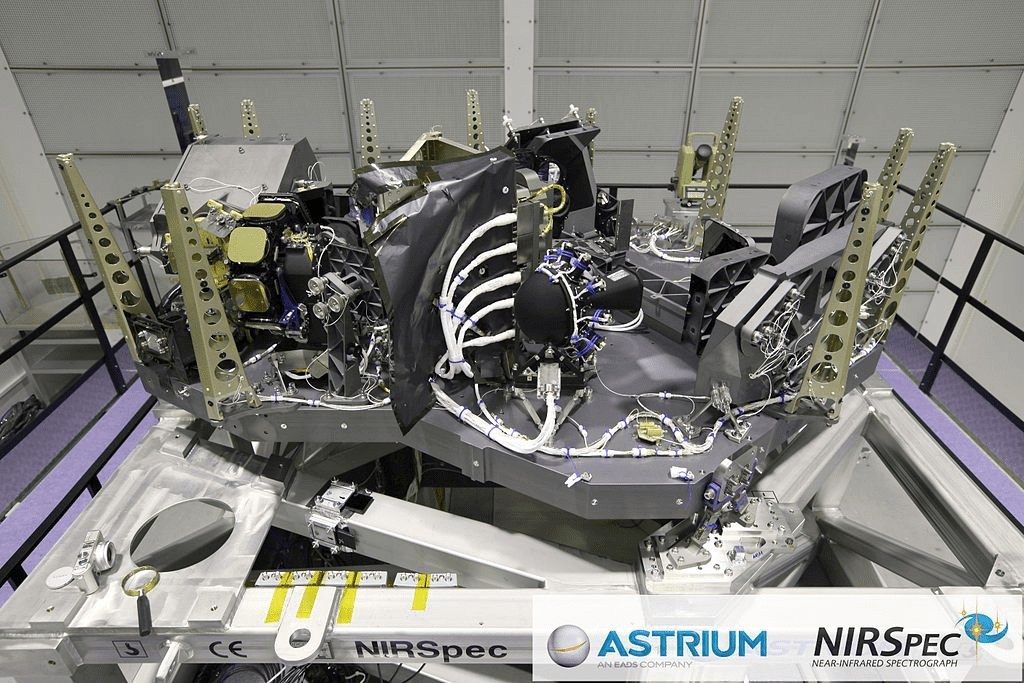
NIRISS
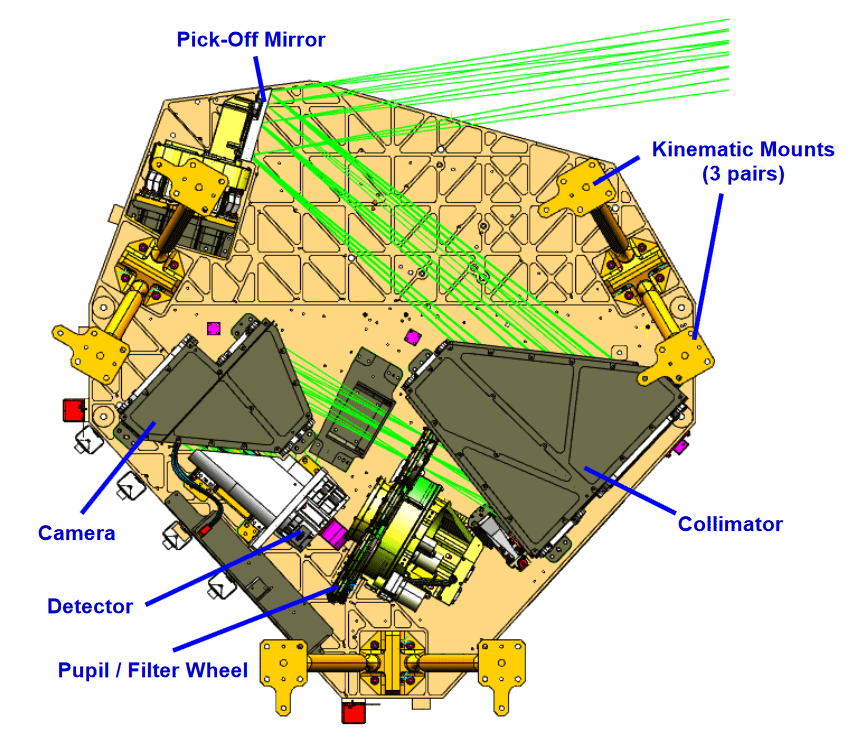
Comparision between the 4 observation instruments
Parallel observing refers to the simultaneous operation of more than one science instrument, with each viewing a different area of the JWST focal plane.
Astronomer’s Proposal Tool – APT
Astronomer’s Proposal Tool (APT): https://www.stsci.edu/scientific-community/software/astronomers-proposal-tool-apt
No limit on the number of proposals per PI (principal investigator).
Selection Criteria
As it is a dual-anonymous peer review, the content of the proposal matters more than the identity of the applicants. This process has been in place since 2018. “We use a double-blind peer-review process to remove bias from our proposal selection. This means we don’t know the scientist or institution submitting the proposal—a process that, we hope, will enable younger researchers and smaller institutions, not just the large R1 research universities, to be more successful proposers. Another goal is to reduce the disparity in success rates between men and women.” Reference Now, even scientists with less traction in the community have a good chance to succeed with their proposals. Potentially, even citizen scientists could submit a proposal. However, before submitting a proposal, certain checks should be done:
“Ranking them based on three important criteria: how much the proposal will impact knowledge within a subfield, how much it will advance astronomy in general, and whether the proposed idea requires the unique capabilities of JWST to be successful. ” Reference
- Is there already enough and sufficient observation data available for the topic of research?
- Are there other observation instruments (List of telescopes) availble that will fullfill the objective of the planned observation?
- If it is related the solar system, is there a mission (satellite) or planned mission that will deliver the objective of the planned observation?
- Depending on the instrument of observation available on the James Webb Telescope – does this instrument align to the planned observation?
- Amount of time – the less the better
- Categories:
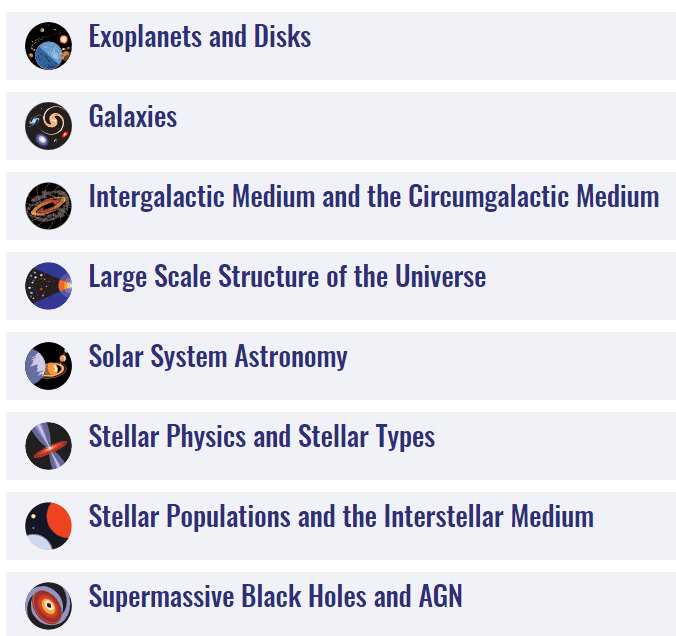
Minimum Requirement: Observation goal cannot be achieved with other telescopes available
While the committee will not check if data is already available, it will first review whether the planned observation can only be conducted with one of the scientific instruments on the James Webb Space Telescope, or if there are better-suited alternatives. This is a key minimum requirement that must be met in order to remain in the selection process. See List of Space Telescopes.
Minimum required qualifications: scientists studying for their PhDs – “students can be just as successful as their mentors” – Christine Chen
Cycle 4 expected observation start: July 2025
Current status James Webb: https://webb.nasa.gov/content/webbLaunch/whereIsWebb.html
Orbit of James Webb Space Telescope:
Each target in the sky is in JWST’s view twice a year.
Data processing on the James Web Space Telescope
Most of the data processing on the telescope is done by conventional single-board computers.[206] The conversion of the analog science data to digital form is performed by the custom-built SIDECAR ASIC (System for Image Digitization, Enhancement, Control And Retrieval Application Specific Integrated Circuit)
Twitter List James Webb Sapce Telescope JWST
Twitter List James Webb Space Telescope
References:
https://en.wikipedia.org/wiki/James_Webb_Space_Telescope
https://www.space.com/james-webb-space-telescope-observing-time-anonymous
 Circular Astronomy
One response to “How Do You Rent Observation Time on the James Webb Space Telescope (JWST)?”
[…] noise. Although spending as much time as possible on any target would be great, telescope times are expensive! The trick is to determine what a reasonable exposure time is so that you can safely obtain the […]
LikeLike