ISO-Chal-1471 is a young, low-mass star located approximately 600 light-years away from Earth. ISO-Chal 147 is located in the Chamaeleon I star-forming cloud. It is a red dwarf star, which is a type of star that is very common in the Milky Way and burns through fuel slowly. Here are the key points from recent studies using the James Webb Space Telescope (JWST):
Protoplanetary Disk:
- ISO-Chal-147 has a protoplanetary disk of gas around it which s rich in carbon-based molecules, including hydrocarbons. This is surprising because most young stars have disks that are rich in oxygen-based molecules.
- The star’s age is 1 to 2 million years, and its mass is 11% of our Sun’s.
- Protoplanetary disks around low-mass stars are challenging to study due to their smaller size and lower brightness.
Hydrocarbon Molecules:
- The JWST detected an unusually high amount of hydrocarbon molecules in ISO-Chal-147’s disk.
- Hydrocarbon molecules contain carbon atoms.
- Such disks may give birth to planets that are poor in carbon, similar to Earth.
- Disks around Sun-like stars tend to be carbon-poor and rich in oxygen-containing molecules.
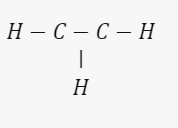
- Hydrocarbon molecules (Methane, CH4; Ethane, C2H6; Ethylene, C2H2; Diacetylene, C4H2; Propyne, C3H4; Benzene, C6H6)
- First extrasolar detection of ethane (C2H6), the largest fully-saturated hydrocarbon detected outside our Solar System
Implications:
- Understanding protoplanetary disks around low-mass stars helps us learn about planet formation in different contexts.
- Collaborations across disciplines, like astronomy and chemistry, contribute to scientific progress.
 Circular Astronomy