Beyond the Millennium Statement: A Dual Structure–Transformation Reformulation of the Yang–Mills Mass Gap Problem
“Perhaps some mathematical problems remain difficult not because their statements are incomplete, but because they are represented from only one side.”
Introduction
The Clay Millennium Prize Problems are among the most carefully formulated open problems in mathematics. They are not vague questions waiting to be clarified. Each has been refined by decades of research and reviewed by leading experts.
Yet there is another kind of refinement that has received comparatively little attention.
Rather than asking whether a problem statement is correct, we can ask:
Does the statement fully represent the mathematical object?
I propose that every major mathematical problem should be expressed simultaneously through two complementary representations:

where
- S denotes the stable mathematical structure,
- F denotes the admissible transformations acting on that structure.
These are connected through an involution

The idea is not to replace the original problem.
It is to expose a second representation that may reveal hidden relationships, intermediate invariants, and new research directions.
Among the Millennium Problems, none appears more naturally suited to this framework than Yang–Mills existence and mass gap.
The Classical Problem
Informally, the Clay problem asks:
Construct a mathematically rigorous quantum Yang–Mills theory in four-dimensional spacetime for every compact simple gauge group and prove that the theory possesses a positive mass gap.
The official statement is already mathematically precise.
But notice something.
Almost every object appearing in the problem belongs naturally to one of two worlds.
One describes what exists.
The other describes how it changes.
Step 1 — The Structural Representation
The stable mathematical structure consists of the objects that define the theory.
- Let

- where
- is spacetime,
- is the compact simple gauge group,
- is the principal bundle,
- is the space of gauge-equivalence classes of connections,
- is the algebra of gauge-invariant observables,
- is the physical Hilbert space,
- is the energy spectrum.
These are the stable structures.
They answer the question
What exists?
Step 2 — The Transformation Representation
Now consider the transformations.
- Let

- where
- represents gauge transformations,
- represents time evolution,
- represents renormalization-group flow,
- denotes local field variations,
- represents reconstruction maps,
- denotes symmetry generators.
These answer a different question.
How does the theory move?
Notice that the original Clay statement does not explicitly organize the problem around these transformations, even though every proof attempt must.
The Dual Representation
Instead of viewing Yang–Mills as merely a collection of fields satisfying equations, represent it as
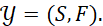
The duality operator exchanges the viewpoints.

Applying 
What Changes?
Traditionally, one thinks
Gauge field
↓
Curvature
↓
Quantum theory
↓
Mass gap
The dual representation instead asks
Transformation system
↓
Generated invariants
↓
Emergent geometry
↓
Emergent spectrum
The direction of reasoning has changed.
Structure View
Objects
- principal bundles
- gauge-equivalence classes
- curvature
- Wilson loops
- observables
- Hilbert space
Relations
- locality
- gauge invariance
- covariance
- operator algebra
Invariants
- spectrum
- topological charge
- symmetry group
- vacuum
Structural Question
- Which stable structures necessarily possess a positive spectral gap?
Transformation View
- Instead of beginning with fields, begin with operations.
Primitive transformations
- gauge transformation
- parallel transport
- local deformation
- renormalization
- time evolution
- quantization
- reconstruction
Generated transformations
- correlation evolution
- scale evolution
- symmetry breaking
- confinement dynamics
Transformation Question
- Which transformation systems necessarily generate a stable positive energy gap?
Notice the subtle change.
The mass gap is no longer merely a property.
It becomes the endpoint of a transformation process.
The New Central Question
Instead of asking: Does the Hamiltonian possess a positive mass gap?
The dual representation asks: Which transformation systems inevitably generate a Hamiltonian whose spectrum possesses a positive gap? The focus shifts from structure to structure generation.
Separating Physical and Redundant Transformations
One of the most interesting consequences is that the framework naturally distinguishes
Redundant transformations
Gauge transformations merely change descriptions.
They should not appear as genuine dynamics.
Physical transformations
- Time evolution
- Renormalization
- Scale evolution
- Operator dynamics
- These genuinely alter physical information.
- The dual representation therefore becomes

rather than
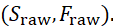
This distinction is often scattered across textbooks but becomes explicit in the problem statement itself.
The Mass Gap Becomes a Structural Invariant
In the standard formulation, the mass gap is the theorem to be proved.
In the dual representation, it is identified as one member of the structural layer.

with

The natural dual question becomes
Which transformation principles force

rather than
How do we prove

This may sound similar, but mathematically it reorganizes the search.
Intermediate Research Objects
The framework naturally inserts layers that are usually implicit.
Instead of
Gauge theory
↓
Mass gap
we obtain
Gauge transformations
↓
Invariant observables
↓
Correlation decay
↓
Spectral reconstruction
↓
Hamiltonian
↓
Mass gap
Every arrow becomes a research problem.
Every node becomes an independently testable object.
A New Research Record
Rather than publishing only a theorem statement, future conjectures could include
Structure
- Objects
- Relations
- Invariants
- Symmetries
Transformations
- Generators
- Allowed operations
- Dynamics
- Flows
- Reconstruction maps
Duality
- Explicit correspondence

Dependency Graph
- Known implications
- Equivalent formulations
- Barrier results
- Computational evidence
Machine Representation
- Semantic graph
- Transformation graph
- Invariant graph
- Formal specification
Why AI Could Be Useful
This framework is not asking AI to prove Yang–Mills.
Instead, AI becomes a compiler for mathematical problems.
Given a conjecture, it could automatically identify
- structural objects,
- transformation systems,
- hidden assumptions,
- generated invariants,
- equivalent formulations,
- dependency graphs,
- intermediate conjectures,
- computational variants,
- dual representations.
The mathematics remains unchanged.
The representation becomes richer.
A Different View of the Millennium Problem
The original Clay problem asks:
Construct a Yang–Mills theory and prove the existence of a mass gap.
The dual representation asks:
- Construct the paired system

- identify the involution

- separate structural invariants from transformation generators,
- prove that each determines the other,
- and show that the transformation dynamics necessarily generate a stable spectral invariant

The mass gap is no longer an isolated numerical property.
It becomes the structural fingerprint of an underlying transformation system.
Conclusion
This reformulation does not claim to make the Yang–Mills problem easier. Nor does it replace the precise Clay statement. What it does is reorganize the problem around a central methodological principle: every mature mathematical theory contains both stable structures and transformation systems, and a complete problem statement should expose both.
For Yang–Mills, this perspective is particularly natural. Gauge theory is built on transformations, yet its ultimate goal is to establish stable physical structure—a well-defined quantum theory with a positive mass gap. The proposed duality

offers a way to treat these not as separate aspects but as complementary representations of the same mathematical object.
Whether this leads directly to new proofs is unknown. But even if it does not, it provides a systematic language for organizing objects, dynamics, invariants, and intermediate questions. That alone could make the problem more accessible to both mathematicians and AI systems.
The broader proposal is therefore methodological: before asking an AI to solve a Millennium Problem, first ask it to compile the problem into its structural and transformational forms. If that richer representation consistently reveals overlooked connections or clearer research pathways, then improving the representation of mathematical problems may become a valuable research contribution in its own right.
Solved Problems Closest to the Yang–Mills Existence and Mass-Gap Problem
The reformulated Yang–Mills problem asks for more than a positive number 

A useful comparison should therefore measure several kinds of proximity:
- Is it a gauge theory?
- Is the gauge group non-Abelian?
- Is it defined in four dimensions?
- Is it a genuine continuum quantum field theory?
- Is the construction mathematically rigorous and compatible with axiomatic QFT?
- Is the gap generated dynamically, rather than inserted through a mass term?
- Does the proof connect transformation data, correlation decay, and spectral structure?
No solved model matches all seven criteria. The closest solved results each reproduce a different part of the required structure.
Ranking
| Rank | Solved model or theorem | Main part reproduced | Principal missing element |
| 1 | Four-dimensional non-Abelian lattice Yang–Mills at strong coupling | Same dimension, gauge structure and rigorous lattice mass gap | No continuum limit at the required weak-coupling scaling |
| 2 | Three-dimensional compact lattice gauge theory | Rigorous confinement and mass generation through exact duality | Abelian, three-dimensional and lattice-regulated |
| 3 | Two-dimensional continuum Yang–Mills theory | Rigorous non-Abelian continuum gauge measure and observables | Two dimensions have radically simpler local dynamics |
| 4 | Two-dimensional Gross–Neveu model | Rigorous asymptotically free interacting QFT and dimensional transmutation | Fermionic, non-gauge and two-dimensional |
| 5 | Two-dimensional Schwinger model | Gauge theory with dynamically generated mass | Abelian and dependent on fermionic matter |
| 6 | Constructive  and  theories | Complete continuum construction, reconstruction and mass gap | Scalar rather than gauge theory; super-renormalizable |
| 7 | Lattice gauge–Higgs models | Gauge-invariant lattice theory with rigorous spectral analysis | Mass is tied to Higgs-sector structure and no continuum limit |
The ranking is not absolute. If “same equations and objects” receives the highest weight, lattice Yang–Mills comes first. If “complete continuum construction” is weighted more heavily, two-dimensional Yang–Mills or constructive scalar field theory may move upward.
1. Four-dimensional non-Abelian lattice Yang–Mills at strong coupling
Why it is the closest analogue
This is the nearest solved version of the actual problem because it retains:
- compact non-Abelian gauge groups such as
;
- four-dimensional Euclidean spacetime, discretized as a lattice;
- local gauge invariance;
- Wilson-loop observables;
- reflection positivity;
- a transfer-matrix or Hamiltonian interpretation;
- exponential decay and a positive gap in the strong-coupling region.
Rigorous strong-coupling methods establish existence and clustering for lattice gauge models.
Modern work continues to derive mass-gap and functional-inequality results for

and

lattice Yang–Mills at sufficiently strong coupling in arbitrary dimension.
Structure–transformation form
The lattice theory supplies a clear pair

where

is the lattice spacing.
The structural side contains:
- group-valued link variables;
- plaquette holonomies;
- gauge-invariant Wilson loops;
- the Gibbs measure;
- correlation functions;
- the transfer-operator spectrum.
The transformation side contains:
- vertex gauge transformations;
- lattice translations;
- local link updates;
- refinement or coarse-graining;
- transfer-matrix evolution;
- strong-coupling cluster expansions.
One proves a lattice relation resembling

This provides a correlation length and hence a lattice mass scale.
Why it does not solve the Millennium Problem
The physical continuum theory requires

while the bare coupling is adjusted so that observable physical quantities remain finite. The strong-coupling estimates apply in a region far from the expected continuum scaling regime.
A lattice gap

is not enough. In physical units one must control something like
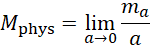
or an appropriately normalized equivalent, while simultaneously proving convergence of correlation functions and reconstruction of a nontrivial continuum theory.
The missing bridge is therefore:

without uniform renormalization-scale control.
Lesson for the reformulated problem
This model shows that the transformational layer can produce the desired stable structure at every fixed regulator. The unsolved question is whether that structure survives the regulator-removal transformation.
That suggests splitting the Millennium problem into two linked claims:
- Regulated gap generation: establish a positive, gauge-invariant spectral gap for approximating systems.
- Gap transport: prove that the gap and axiomatic structure survive the continuum and infinite-volume limits.
This is probably the most important structural lesson in the entire comparison.
2. Three-dimensional compact lattice gauge theory
Göpfert and Mack rigorously proved confinement of static charges in the three-dimensional compact  Villain lattice model for all values of the coupling. Their argument uses an exact duality relating the gauge model to a dual statistical-mechanical system.
Why it is exceptionally relevant to your duality proposal
This example does not merely possess a useful alternative formulation. Duality is the proof mechanism.
The original gauge structure is transformed into a dual description involving topological defects and an effective gas or spin system. Nonperturbative disorder in the transformation representation becomes confinement and a finite correlation length in the structural representation.
Schematically,

and

This is close to the proposed principle that a transformation system generates stable spectral structure.
Similarities to four-dimensional Yang–Mills
- local gauge symmetry;
- nonperturbative effects;
- no ordinary perturbative mass term responsible for the gap;
- confinement-related behavior;
- exponential decay;
- exact translation between two mathematical descriptions.
Critical differences
- is Abelian;
- the model is three-dimensional;
- the regulator remains present;
- the exact duality has no known direct analogue strong enough to solve four-dimensional non-Abelian Yang–Mills.
Main lesson
This is the strongest evidence that the proposed  methodology can be more than organizational language. In a nearby solved gauge model, converting the theory into its dual transformation representation is precisely what exposes the mechanism behind the gap.
For that reason, although I rank it second by overall mathematical proximity, I rank it first as evidence for the usefulness of your duality framework.
3. Two-dimensional continuum Yang–Mills theory
Two-dimensional Yang–Mills theory has rigorous continuum constructions for compact gauge groups. Its measure can be defined on gauge-equivalence classes or through holonomy fields, with Wilson-loop expectations expressed through heat kernels. A complete continuum treatment on compact surfaces was given in work such as Lévy’s construction, and a 2026 result established a broad universality theorem showing convergence of several classes of lattice actions to the continuum Yang–Mills measure.
Why it is close
It preserves several defining ingredients of the Millennium problem:
- compact non-Abelian gauge groups;
- continuum gauge theory;
- gauge-equivalence classes;
- Wilson loops and holonomies;
- rigorous probability measures;
- lattice-to-continuum correspondence;
- geometric and topological dependence.
Under your framework:

while

The transformational rules determine the measure’s structural properties. In particular, heat-kernel convolution and gluing laws reconstruct global amplitudes from local pieces.
Why the analogy stops short
Two-dimensional pure Yang–Mills has far fewer local dynamical degrees of freedom than the four-dimensional theory. Its tractability is not merely a technical advantage; it reflects a qualitative simplification.
The central unresolved four-dimensional mechanism—how local non-Abelian quantum fluctuations generate a finite physical scale—is largely absent or transformed into a much simpler global geometric problem in two dimensions.
Main lesson
This solved case demonstrates that the following part of the programme is feasible:

The missing component in four dimensions is not just constructing a measure. It is controlling renormalized local fluctuations strongly enough to reconstruct a nontrivial theory with a uniform spectral gap.
4. The two-dimensional Gross–Neveu model
The Gross–Neveu model is not a gauge theory, but it is one of the closest constructive analogues in terms of mechanism. It is an interacting, renormalizable two-dimensional fermionic field theory and shares with four-dimensional Yang–Mills the phenomena of asymptotic freedom and dimensional transmutation. Rigorous constructions have been achieved for massive versions of the model.
Structural similarity
Both theories involve a coupling that becomes weak at short distances and strong at long distances. A dimensionless microscopic coupling is associated with the emergence of a physical scale.
Schematically,

This is close to what Yang–Mills is expected to do.
Transformation interpretation
The relevant 

The generated scale then becomes a stable feature of the spectrum.
In your language, this is an especially clean example of

Important limitation
The fully rigorous generation of a mass without an explicit cutoff or mass term remains subtle in some formulations. One must therefore be precise about which Gross–Neveu version is being called solved. The rigorously constructed massive Gross–Neveu model is a strong analogue for renormalization and constructive control, but it is not a complete analogue of dynamical mass generation in pure Yang–Mills.
Main lesson
A successful Yang–Mills proof may need to convert renormalization-group trajectories into quantitative spectral information. The Gross–Neveu experience suggests that the 

5. The Schwinger model
The Schwinger model is quantum electrodynamics in  dimensions with massless fermions. It is an Abelian gauge theory in which quantum effects generate a massive bosonic excitation even though the classical gauge field is massless.
Why it is relevant
It contains several elements sought in Yang–Mills:
- a continuum gauge theory;
- gauge redundancy;
- quantum mass generation;
- an exactly or rigorously analyzable spectrum;
- relations among currents, fields, transformations and observable excitations.
Its characteristic mechanism can be written schematically as

Why it ranks below Gross–Neveu
The gap depends on matter-field effects and an Abelian anomaly. Pure four-dimensional Yang–Mills must generate a scale using only non-Abelian gauge self-interaction.
Thus the Schwinger mechanism is structurally illuminating but not likely to transfer directly.
Main lesson
The Schwinger model shows that mass generation may be much easier to prove after replacing gauge-dependent fields by gauge-invariant currents or bosonized variables.
That supports a refined Yang–Mills question:
What gauge-invariant transformation variables play the role that bosonized currents play in the Schwinger model?
This is exactly the kind of question a structure–transformation reformulation should expose.
6. Constructive

and

quantum field theories
Constructive field theory provides rigorous continuum models satisfying strong axiomatic requirements, with nontrivial interactions, infinite-volume limits, exponential clustering and particle spectra. For weakly coupled 
Why these models matter
They solve the general constructive chain that Yang–Mills must eventually solve:

This is precisely the sequence emphasized in the official Yang–Mills problem statement, where existence must meet axiomatic QFT standards and the mass gap implies exponential clustering.
Why they are less close physically
- no gauge redundancy;
- scalar rather than connection-valued fields;
- lower dimension;
- super-renormalizable interactions;
- fewer ultraviolet difficulties;
- no confinement problem.
Main lesson
These models provide the best solved template for the logical architecture of a proof.
They suggest that the reformulated Yang–Mills problem should distinguish the following maps:



Your original single involution 
7. Lattice gauge–Higgs theories
Rigorous lattice gauge–Higgs models have been studied through cluster expansions, transfer matrices and mass-spectrum analysis. Results establish gapped phases and, in certain parameter regions, detailed low-energy spectra.
Similarity
They retain:
- gauge invariance;
- local gauge transformations;
- gauge-invariant observables;
- a Hamiltonian or transfer-matrix spectrum;
- rigorous correlation decay.
Difference
The mass-generating mechanism is associated with the Higgs sector or with a particular lattice phase, not the purely non-Abelian self-interaction required in the Millennium problem.
Main lesson
They show that separating redundant gauge transformations from physical spectral degrees of freedom can be done rigorously. However, they also warn that proving a gap is insufficient unless one proves that it arises in the correct phase and survives the required continuum limit.
Comparative scorecard
Using a qualitative score from 0 to 2—where 2 means close agreement, 1 partial agreement and 0 substantial mismatch—the comparison looks approximately as follows:
| Solved analogue | Gauge | Non-Abelian | 4D | Continuum | Rigorous QFT | Dynamical gap | RG relevance | Total /14 |
| 4D lattice YM, strong coupling | 2 | 2 | 2 | 0 | 1 | 2 | 1 | 10 |
| 3D compact | 2 | 0 | 1 | 0 | 1 | 2 | 1 | 7 |
| 2D continuum Yang–Mills | 2 | 2 | 0 | 2 | 2 | 0 | 0 | 8 |
| 2D Gross–Neveu | 0 | 0 | 0 | 2 | 2 | 1 | 2 | 7 |
| Schwinger model | 2 | 0 | 0 | 2 | 2 | 2 | 1 | 9 |
| 0 | 0 | 0 | 2 | 2 | 1 | 1 | 6 | |
| Lattice gauge–Higgs | 2 | 1 | 1 | 0 | 1 | 1 | 1 | 7 |
The numerical totals should not be read mechanically. For example, the Schwinger model scores well because it is a continuum gauge theory with quantum mass generation, but its Abelian anomaly mechanism is less transferable to pure Yang–Mills than the table alone suggests. That is why I place it fifth rather than second.
What the solved analogues collectively tell us
No single solved problem provides the template. Collectively, however, they cover most of the required chain:

This suggests that the open Yang–Mills problem can be viewed as a compatibility problem:
Can all these individually solved mechanisms coexist in one four-dimensional, non-Abelian, gauge-invariant continuum construction?
That is a sharper statement than simply “prove a mass gap.”
A stronger reformulation derived from the comparison
The comparison indicates that the central research object should not be only

but a regulated family

where:
 represents the ultraviolet cutoff or inverse lattice spacing;
 represents finite volume;
 contains gauge-invariant correlations and spectral data;
 contains gauge transformations, renormalization maps, local evolution and scale changes.
The problem then becomes:
Construct  and prove that there exist compatible limiting transformations

under which the gauge-invariant structural data converge to a nontrivial four-dimensional quantum field theory and the spectral gap remains bounded below in physical units.
In particular, one needs uniform estimates of the form
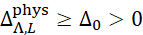
through the limiting process, together with convergence of correlation functions and preservation of reconstruction axioms.
This formulation incorporates the decisive lesson from every solved analogue:
- lattice theories show how to obtain a regulated gap;
- constructive models show how to remove regulators;
- two-dimensional Yang–Mills shows how to retain gauge invariance in a continuum measure;
- Gross–Neveu shows how scale flow may generate mass;
- dual gauge models show how an appropriate transformation representation can reveal nonperturbative structure.
Final assessment
The closest solved problem overall is four-dimensional non-Abelian lattice Yang–Mills at strong coupling.
The closest solved demonstration of your duality principle is three-dimensional compact  lattice gauge theory, because exact duality converts transformation data into confinement and mass-scale information.
The closest solved continuum gauge construction is two-dimensional Yang–Mills.
The closest solved renormalization mechanism is the two-dimensional Gross–Neveu family.
The closest solved proof architecture comes from constructive  and
 field theories.
The likely route to progress is therefore not to imitate one solved model wholesale. It is to identify a representation in which these five partial successes become compatible components of one proof.
Research Question:
Can the Yang–Mills mass-gap problem be reformulated as a theorem about a class of gauge-invariant transformations whose structural properties necessarily imply a uniform spectral contraction?